

Mastitis: The Two Types Every Mum Should Know About (and a Simple Trick That Can Help)Mastitis.

How using an electric toothbrush can help Mastitis
Mastitis. Just hearing the word can make your shoulders tense. It’s sore, it makes you feel absolutely rotten, and when you’re already navigating life with a new baby, it’s the last thing you need.
But here’s something that doesn’t get talked about enough: There are actually two different types of mastitis. Understanding the difference can be the shift between a quick recovery at home and an unnecessary round of antibiotics.
Let’s break it down in a simple, no-nonsense way.
1. Inflammatory Mastitis (The Most Common Kind)
This is what most of my clients discuss in Baby class. It isn’t an infection; it’s inflammation caused by milk stasis (milk sitting in the breast for too long). This happens when:
Baby isn’t attaching deeply.
Feeds are missed or delayed.
There is external pressure (tight bras, bag straps, or sleeping on your front).
You have an oversupply.
How it feels:
A sore, tender area or a firm "lump."
Redness (often in a wedge shape).
A heavy, "bruised" sensation.
You might feel a bit run-down, but generally don't have a high fever.
The Goal: Reduce the swelling and keep the milk moving. Antibiotics are NOT needed for this stage.
2. Bacterial Mastitis (When Infection Sets In)
If inflammatory mastitis isn't managed, or if bacteria enters through a cracked nipple, it can become an infection. This requires medical attention.
Signs to watch for:
High Fever: 38.5°C (101.3°F) or above.
Flu Symptoms: Shivers, body aches, and feeling "hit by a bus."
Appearance: The breast is hot to the touch, very red, and intensely painful.
No Improvement: Symptoms haven't budged after 24 hours of home care.
Quick Comparison: Which one do I have?
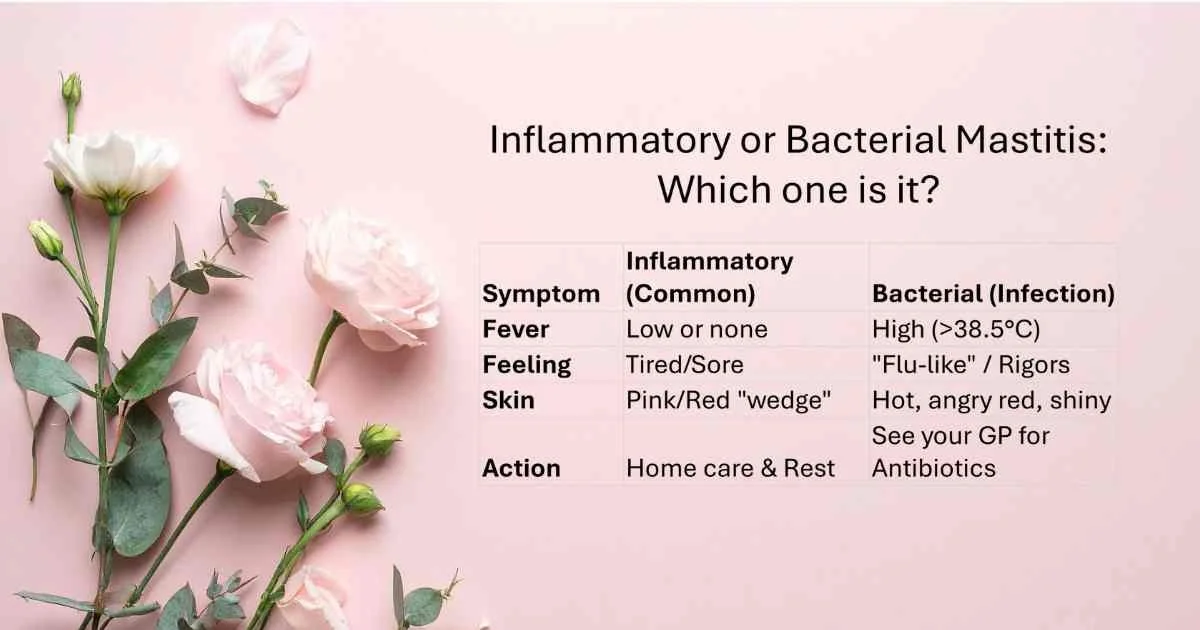
Quick Guide: If you have a high fever and feel like you have the flu, it’s likely bacterial—call your GP
The "New Rules" for Relief: The BAA Protocol
Clinical guidelines have changed! We used to recommend "heat and hard massage," but we now know that can actually make inflammation worse. Instead, remember BAA:
B — Breast Rest: Don’t over-pump or "drain" the breast aggressively. Feed on demand as usual, but don't force extra sessions.
A — Anti-inflammatories: If safe for you, Ibuprofen is your best friend here. It targets the swelling inside the tissue that is blocking the milk.
A — Alignment & Attachment: Ensure the baby is latched well so they can remove milk effectively without causing more trauma.
❄️ Swap Heat for Cold
While a warm shower feels nice, ice packs/cool compresses are better for mastitis. Cold reduces the blood flow and swelling, giving the milk more "room" to flow through the ducts.
The Electric Toothbrush Tip 🪥
This is a game-changer for moving "thickened" milk without hurting yourself.
Why it works: Gentle vibration helps loosen the congestion and encourages lymphatic drainage without the need for deep, painful massage.
How to do it:
Turn on your electric toothbrush (or a lactation massager).
Use the back (the smooth side) of the brush.
Apply it lightly to the sore area. Do not "dig" it in.
The Direction Matters: Move the vibration gently toward your armpit. This helps the excess fluid drain into your lymph nodes.
Do this for a few minutes before or during a feed.
The Key Takeaway
Not all mastitis needs antibiotics. In fact, jumping to them too quickly for inflammatory mastitis can disrupt your gut and breast microbiome.
Support the breast, reduce the swelling, and keep the milk flowing gently.
A Final Word
Trust your instincts—mastitis can escalate quickly, and you deserve support, not guesswork. If you feel "off," have a rising fever, or notice redness spreading rapidly, please reach out to your GP or a lactation consultant. You don’t have to figure this out alone. 🤍
Find Support in Lanarkshire
If you’re local and looking for hands-on help or just a friendly face, come visit us! Bear Necessities in Airdrie hosts a free Infant Feeding Group every Monday.
When: Mondays, 1:00 pm – 2:30 pm
Where: 10 Saline Street, Airdrie
Expert Support: Featuring Angela Chalmers from Latch on Lanarkshire.
Whether you are breastfeeding, bottle-feeding, or a mix of both, everyone is more than welcome. We’d love to see you there.